Colorado’s forests have long been icons of natural beauty and ecological diversity. But today, the Mountain Pine Beetle (Dendroctonus ponderosae) a native bark beetle — is once again emerging as a vital forest health challenge, particularly along the Front Range corridor. This issue goes beyond trees. It intersects with wildfire risk, watershed protection, and community well-being.

Why the Mountain Pine Beetle (MPB) Matters Now
Mountain pine beetles are a natural part of western forest ecosystems. Under healthy conditions, they help cycle nutrients by killing weak or dying trees, which allows new growth and biodiversity to flourish. But when forests are dense, drought-stressed, and exposed to warmer temperatures, beetle populations can surge to outbreak levels that overwhelm even healthy trees. Visit Colorado State Forest Service for the most accurate and up-to-date information regarding MPB and the current outbreak.
Recent aerial survey data show that MPB activity is increasing along the Front Range, including in portions of Larimer, Gilpin, Clear Creek, Boulder, Jefferson, Park, and Douglas counties — areas where ponderosa pine forests dominate.
This resurgence follows conditions that have left many forests stressed: unpredictable and oscillating precipitation and above-average temperatures have weakened tree defenses that historically kept beetle populations in check.
Signs of Infestation to Watch For
The Colorado State Forest Service guides residents and landowners to be vigilant for tell-tale indicators of MPB activity, including:
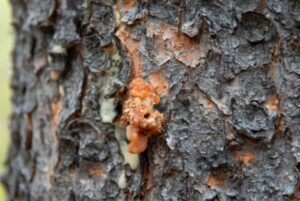
- Pitch tubes — popcorn-like resin masses on tree trunks
- Boring dust in bark crevices and at the base of trees
- Woodpecker damage as birds forage for larvae
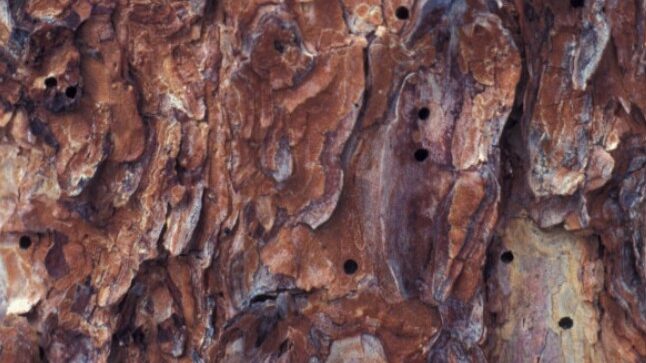
- Exit holes where beetles have emerged from the tree
- Foliage shifting from yellow to reddish brown as infested trees decline
Early identification matters because once an infestation takes hold, tree mortality typically becomes visible over the course of a year or more, and dead trees can become fuel for wildfire.
Forest Health = Water Security + Community Safety
The Front Range sits at the interface of expanding human development and critical forested watersheds that supply municipal and agricultural water. When beetle-killed forests accumulate large quantities of dead wood, they alter fuel structures and increase wildfire severity potential. Severe wildfires, in turn, can:
- Increase soil erosion and sediment loads into reservoirs and streams
- Compromise water treatment infrastructure
- Reduce reservoir capacity, costing communities millions in dredging and repairs
Protecting forest health isn’t just about trees — it’s about ensuring reliable water supplies, protecting infrastructure corridors, and reducing the extreme costs of wildfire suppression and post-fire recovery.
Active Forest Management: The Cornerstone of Resiliency
Large outbreaks of mountain pine beetle (MPB) are extremely difficult to control once they are established. However, forest managers, landowners, and communities can take proactive steps to strengthen forest resilience:
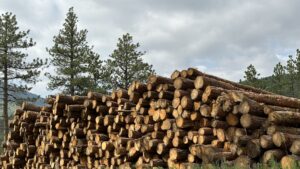
- Stand thinning to reduce density and competition — healthier trees are better able to withstand beetle attacks and drought
- Removal of infested trees and slash to reduce beetle reproduction and spread
- Use of solar treatments, trap trees, and pheromone tools in targeted areas, particularly near homes and infrastructure
- Selective preventive insecticide sprays on high-value trees where appropriate
These landscape-scale strategies are aligned with Colorado’s Forest Action Plan and wildfire mitigation frameworks, which emphasize science-based management to reduce risk and protect ecosystem services.
A Shared Responsibility
Forests don’t respect property lines, and neither do beetles or wildfire. Building resilience requires collaboration across jurisdictions — from private landowners to local governments, watershed councils, and state and federal agencies.
We all depend on Colorado’s forests: for clean air and water, for recreation and tourism, and for the ecological benefits that sustain wildlife and communities. By investing in forest health today, we can reduce future wildfire risk, protect critical water supplies, and ensure these forests remain vibrant for generations to come.